
Cecco Construction is a premier contractor specializing in VDOT-compliant driveway aprons, curb cuts, and entrance installations throughout Northern Virginia. With over 26 years of experience, engineered solutions, and a deep understanding of local permitting requirements, we deliver concrete apron systems that meet and exceed Virginia Department of Transportation (VDOT) standards.
From Fairfax County to Loudoun County, Prince William County, and the City of Manassas, every jurisdiction has its own process—but the foundation of every successful project comes down to proper VDOT apron design and execution.

Any driveway entrance connecting to a public roadway in Virginia typically falls under VDOT authority and may require a land use permit. This includes:
The most commonly used and approved design in Northern Virginia is:
VDOT Standard CG-9D – Concrete Driveway Entrance
This is the primary detail used in curb-and-gutter conditions across many suburban and urban areas.
Additional designs may include:
Why CG-9D is the Industry Standard
The CG-9D design ensures:
At Cecco Construction, we follow these standards while improving performance through engineered installation methods.
While VDOT governs the right-of-way, each locality may add its own requirements. Experience matters.
Fairfax County often requires close attention to:
Loudoun County projects may involve:
Prince William County commonly requires:
The City of Manassas and nearby areas may require:
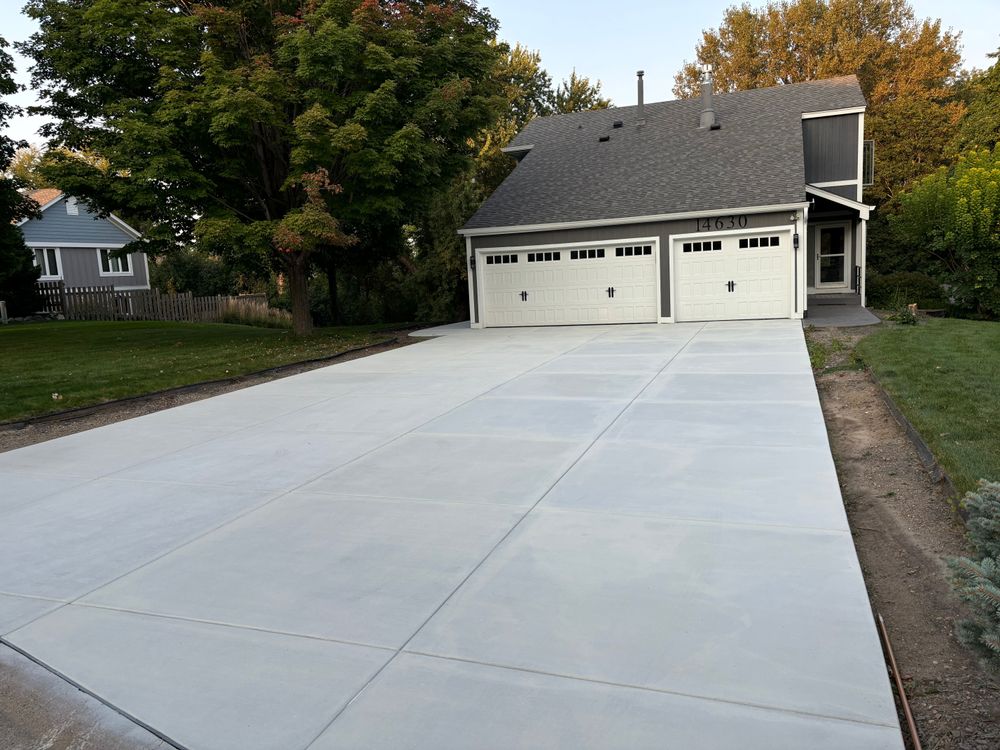
At Cecco Construction, we don’t guess—we engineer every driveway apron based on actual site conditions.
Every apron installation includes:
We exceed typical contractor practices by using:
We also utilize professional concrete delivery methods to ensure:
Installing a VDOT apron is a regulated process that must be handled correctly.
Cecco Construction helps navigate this process efficiently to avoid delays and failed inspections.
We bring decades of hands-on construction knowledge and deep understanding of Northern Virginia site conditions.
Many contractors avoid VDOT work because:
We specialize in:
We deliver:
Whether your project is in Fairfax County, Loudoun County, Prince William County, or Manassas, one fact remains:
Every successful project depends on proper VDOT design, especially CG-9D standards.
Without correct design and execution:
Cecco Construction helps ensure your project is completed correctly the first time.
If you need a driveway apron, curb cut, or VDOT-compliant entrance in Northern Virginia, you need a contractor who understands the system.
Cecco Construction provides:
Cecco Construction proudly serves:
At Cecco Construction, we understand that VDOT apron construction is far more technical than
simply pouring concrete. Many contractors may understand basic driveway replacement, but
very few fully understand VDOT entrance gutter geometry, drainage transitions, ADA sidewalk
requirements, municipal engineering standards, and permit coordination associated with
residential apron construction throughout Northern Virginia.
Cecco Construction regularly performs VDOT-related apron and driveway entrance work
throughout:
● Fairfax County
● Loudoun County
● Arlington County
● Prince William County
● Reston
● Fairfax Station
Proper understanding of VDOT entrance designs is critical to avoiding failed inspections,
improper drainage flow, standing water, settlement issues, and rejected permits. These systems
require precise grading elevations, reinforced concrete placement, compacted aggregate bases,
and detailed form work designed to comply with VDOT engineering requirements. (vdot.virginia.gov)
The CG-9B entrance detail is commonly utilized in tighter residential environments where limited
right-of-way exists between the roadway, curb line, and sidewalk system. This design
incorporates tighter curb-return radiuses and requires accurate grading elevations to maintain
proper gutter drainage flow and ADA sidewalk transitions.
Cecco Construction understands how critical proper slope calculations and flow-line elevations
are when installing these systems in older Northern Virginia communities. Incorrect installation
can create ponding water, drainage failures, or failed VDOT inspections. (vdot.virginia.gov)

The CG-9D is one of the most common modern VDOT entrance gutter designs utilized
throughout newer suburban developments in Fairfax County, Loudoun County, Prince William
County, Reston, and Fairfax Station. This design utilizes a larger flared transition radius that
improves turning movement, traffic flow, and roadway drainage performance.
Because the flare geometry is larger, the installation requires more extensive form work, precise
grading control, and proper drainage planning. Cecco Construction understands how to properly
form and install these wider transitions to prevent standing water, birdbaths, or roadway
drainage issues.
concrete contractors. This design is frequently utilized where sidewalks cross directly through
the apron area and where pedestrian accessibility becomes a significant engineering concern.
Cecco Construction understands ADA cross-slope limitations, sidewalk tie-ins, pedestrian
access transitions, and the importance of maintaining proper elevations throughout the entire
entrance system. Incorrect grading can create trip hazards, drainage failures, or noncompliant
sidewalk conditions requiring costly replacement. (vdot.virginia.gov)
In portions of western Loudoun County and rural areas surrounding Prince William County,
VDOT may utilize PE-1 ditch-line entrance systems instead of traditional curb-and-gutter
designs. These systems often require culvert pipes, shoulder reconstruction, ditch regrading,
erosion control, stabilization stone, and proper drainage calculations.
Cecco Construction understands how to coordinate culvert pipe sizing, roadway shoulder
transitions, drainage flow management, and erosion stabilization associated with these more
technical rural entrance systems. (vdot.virginia.gov)
Cecco Construction has completed many VDOT-related apron and driveway entrance
installations throughout Northern Virginia. While contractors themselves cannot directly issue
VDOT permits, Cecco Construction understands the process and can help facilitate the
preparation required to move projects forward properly.
Cecco Construction can assist homeowners with:
● Coordinating engineering drawings
● Facilitating required surety bonds
● Understanding VDOT entrance requirements
● Assisting with supporting documentation
● Coordinating the approximate $100 VDOT application process
● Bringing documentation to the VDOT permit office in Chantilly
● Coordinating apron layout and geometry requirements
● Understanding inspection sequencing and scheduling
Many homeowners are surprised at how technical the VDOT approval process can become.
Proper documentation, accurate drawings, drainage planning, and correct entrance geometry
are all critical to obtaining approval and passing inspection.
Many contractors simply replace concrete without fully understanding VDOT engineering
standards, municipal requirements, roadway drainage transitions, or inspection procedures.
Proper VDOT apron construction requires much more than basic concrete placement.
Cecco Construction understands:
● VDOT entrance geometry
● ADA sidewalk compliance
● Drainage flow-line transitions
● Entrance width requirements
● Gravel base compaction
● Reinforced concrete placement
● Air-entrained 4,000 PSI concrete mixes
● Culvert and drainage pipe systems
● Municipal inspection requirements
● Northern Virginia freeze-thaw performance conditions
Cecco Construction understands how to properly excavate, form, reinforce, grade, and install
VDOT-compliant entrance systems designed to meet Northern Virginia engineering standards
while providing long-term durability and performance.

In many areas of Northern Virginia, including Fairfax County, Loudoun County, Prince William
County, and Alexandria, standard residential driveway aprons are relatively straightforward.
However, there are situations where the apron design becomes significantly more complex due
to existing site conditions such as VDOT drainage structures, curb inlet boxes, steep driveway
gradients, limited frontage, or unusual roadway geometry.
At Cecco Construction, we frequently encounter these more advanced driveway entrance
conditions. As a design-build contractor serving Northern Virginia for over 26 years, we
understand how to evaluate challenging VDOT entrance situations and work toward solutions
that may be acceptable to VDOT engineering and permitting staff.
One of the most difficult conditions encountered during a VDOT apron installation is the
presence of a nearby curb inlet or drainage box located directly adjacent to the proposed
entrance.
These drainage structures are designed to capture stormwater runoff flowing through the gutter
line along the roadway. Improper apron construction can interfere with:
● gutter flow
● curb transitions
● drainage capacity
● water velocity
● inlet throat access
● roadway drainage performance
When a drainage box exists close to the proposed driveway entrance, the traditional wider
sweeping apron radius may not be the best solution.
In many cases, a tighter-radius VDOT entrance design may provide a better engineering
solution. Northern Virginia residential apron installations commonly utilize variations of:
● CG-9B
● CG-9C
● CG-9D
The CG-9D style generally incorporates wider sweeping curb returns and larger radii. These are
often used for upscale homes, larger frontage lots, and locations where additional turning
movement is desired.
However, where drainage structures are present, a CG-9B-style tighter radius may allow:
● better preservation of gutter flow
● reduced interference with drainage structures
● less disturbance to existing curb geometry
● reduced removal of existing driveway surfaces
● easier tie-in to existing grades
The tighter radius configuration may also reduce overall concrete replacement requirements
and limit disturbance to the homeowner’s existing driveway.
Another common issue encountered during VDOT apron replacement is the elevation transition
from the roadway into the private driveway.
Many older driveways in Northern Virginia were installed decades ago and may not meet current
VDOT slope transition standards. In these situations, simply replacing the apron can create:
● scraping issues
● improper drainage
● abrupt transitions
● vehicle bottoming-out
● ponding water
● noncompliant driveway slopes
In some situations, the homeowner may not wish to disturb the primary driveway because:
● the driveway is decorative
● the driveway is structurally sound
● the driveway is expensive to replace
● the affected area is limited
● the customer wants to minimize costs
A properly designed transition detail may help solve these issues without requiring full driveway
replacement.
At Cecco Construction, we evaluate:
● driveway pitch
● roadway elevation
● gutter flow line
● curb height
● inlet location
● existing driveway elevations
● runoff patterns
● vehicle approach angles
In many situations, a short transitional concrete panel may be designed behind the apron to
gradually tie the VDOT entrance into the existing driveway.
This may include:
● saw-cutting only the affected transition area
● localized driveway removal
● tapered slab construction
● parabolic grade transitions
● modified tie-in elevations
● maintaining positive drainage flow
The goal is to preserve as much of the original driveway as possible while still attempting to
meet VDOT requirements.
When dealing with complex VDOT entrance conditions, simple sketches are often insufficient.
Proper layout drawings may include:
● spot elevations
● centerline elevations
● curb elevations
● gutter flow elevations
● driveway tie-in elevations
● inlet box locations
● slope percentages
● transition details
● concrete thickness
● apron dimensions
● radius dimensions
These drawings help communicate the design intent to VDOT reviewers and field inspectors.
Every VDOT apron installation is ultimately subject to field review and approval by VDOT
personnel. Existing site conditions may require modifications beyond standard entrance details.
Complex conditions may involve:
● unusual roadway grades
● limited right-of-way
● existing utilities
● storm drainage structures
● steep driveways
● retaining walls
● sidewalks
● utility conflicts
● existing concrete elevations
Because of this, site-specific modifications may sometimes be necessary to create an
acceptable entrance configuration.
Many contractors simply replace existing concrete without understanding:
● VDOT geometry
● roadway drainage
● curb-and-gutter flow
● slope transition requirements
● apron radius configurations
● permit coordination
● grading implications
At Cecco Construction, we approach VDOT apron projects from a design-build perspective. Our
experience allows us to evaluate complicated site conditions and help property owners
understand possible solutions before construction begins.
We can assist with:
● preliminary apron layout concepts
● identifying potential grading problems
● evaluating driveway transitions
● drainage observations
● permit facilitation
● contractor coordination
● layout recommendations
● project planning
Cecco Construction is one of the few contractors in Northern Virginia with the experience, equipment, and licensing to handle both concrete aprons and asphalt aprons. Many contractors specialize in only one side of the work, but driveway entrances, VDOT aprons, parking areas, and transition points often require a clear understanding of both concrete and asphalt construction. Our team understands proper sub-base preparation, grading, drainage, compaction, forming, concrete placement, asphalt tie-ins, and the importance of a clean transition from the public roadway to the private driveway or commercial entrance. Whether the project calls for a concrete apron, asphalt apron, driveway replacement, curb cut, or a repair where asphalt meets concrete, Cecco Construction can provide a practical, code-conscious solution. We serve homeowners, businesses, and property managers throughout Northern Virginia with apron work designed for strength, drainage, appearance, and long-term performance.
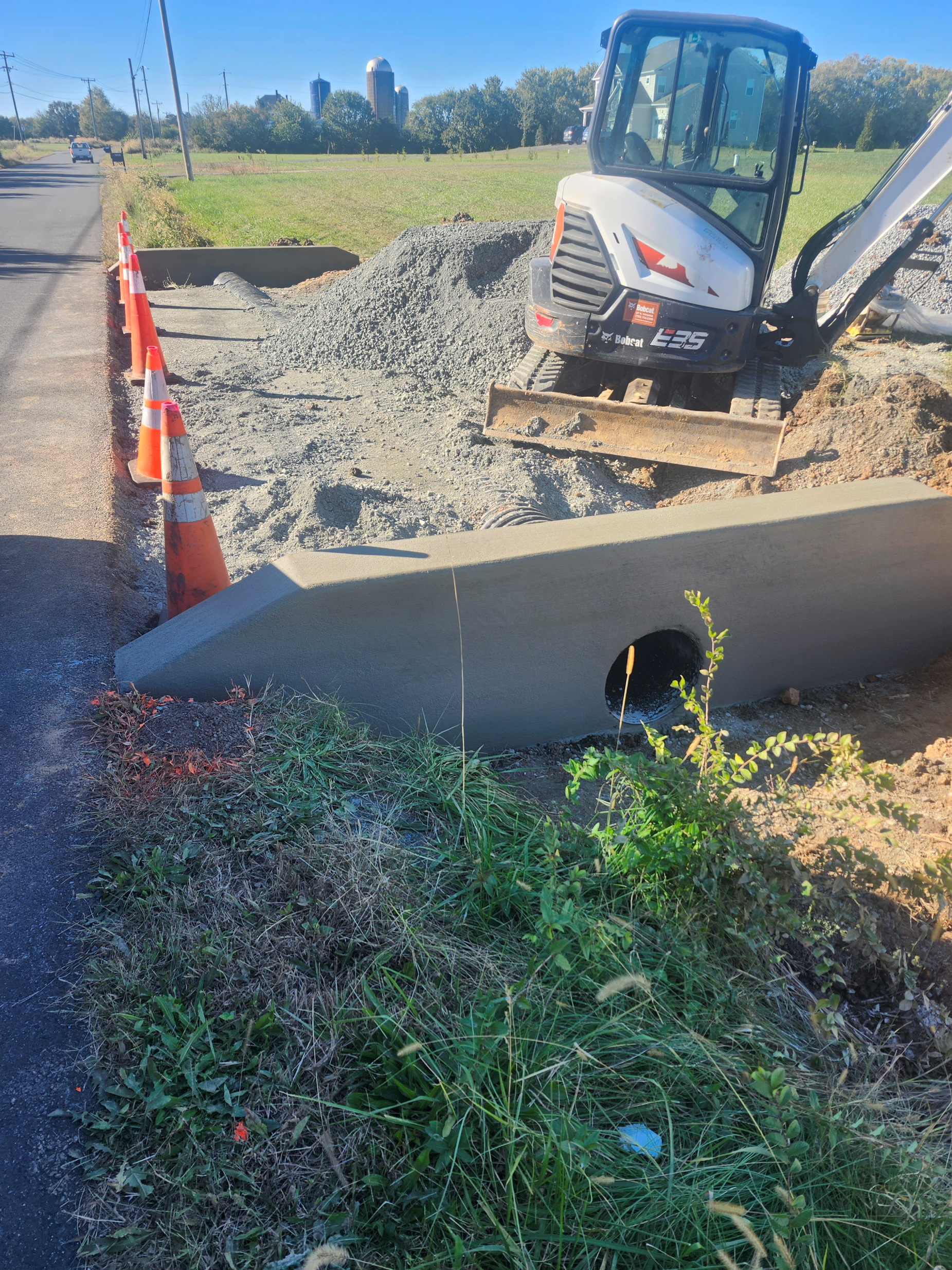
At CECCO Construction, residential VDOT driveway apron installations often require more than simply connecting a driveway to an existing asphalt roadway. Proper drainage may require installing a culvert beneath the driveway entrance to maintain stormwater flow along roadside ditches.Using our own mini excavators, we perform the necessary excavation, install drainage culverts, construct concrete support structures where required, and place and compact the appropriate aggregate base materials. Proper grading, drainage, and structural support are essential to preventing settlement, erosion, and premature driveway failure.CECCO Construction builds residential driveway entrances throughout Northern Virginia in accordance with applicable VDOT specifications and approved entrance requirements.